
Please read This page shares general information about pelvic floor exercise and everyday posture habits. It is not medical advice and does not replace an assessment from a qualified professional. Results differ from person to person, so use the material as guidance and stop if an exercise causes pain or discomfort.

Everyday habits that help
Supporting Exercises and Posture Habits
Pelvic floor training works better when the rest of the day is not fighting it. Posture, breathing, and how long you sit in one position all affect how much you can feel the muscles. Nothing on this page is a separate workout.
These are small adjustments, not a second workout
The main pelvic floor work happens in short, deliberate sessions. Everything on this page is background support: how you breathe between contractions, how you hold yourself at a desk, how often you stand up during a long day. Get these roughly right and the main exercise becomes easier to feel and easier to control.
Body awareness is the thread that connects the chapters below. A man who notices his ribs staying still while he breathes, or his pelvis tucking under him in a low chair, can correct it in seconds. That noticing is the skill. It does not need equipment, a gym, or a fixed time slot.
Breath
Let the lower ribs widen instead of bracing the abdomen against the pressure.
Seat
Keep the pelvis neutral so the muscles have room to move instead of being tucked.
Breaks
Stand up briefly every hour or so and the load on the pelvis changes.
Breathing that does not brace
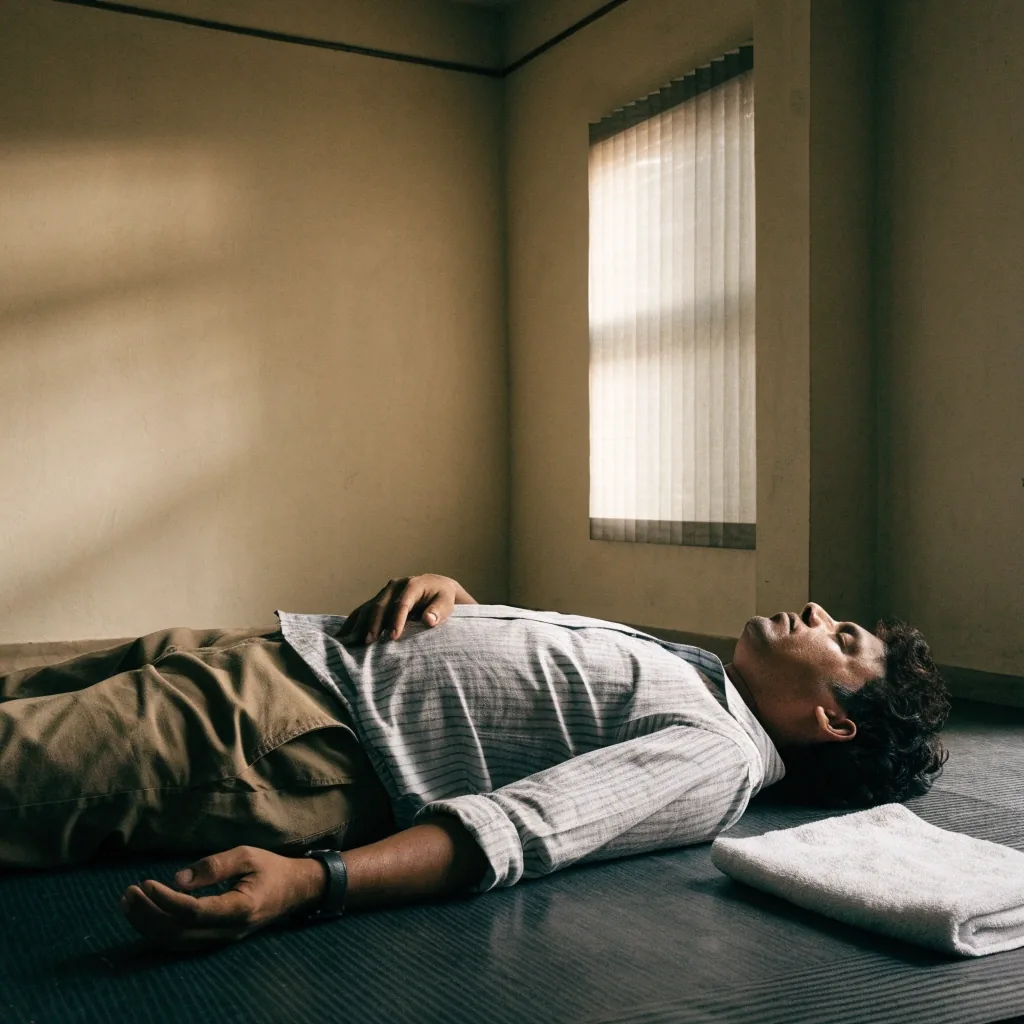
Diaphragmatic breathing, where the lower ribs widen on the inhale, is the pattern most guidance describes alongside pelvic floor work. Bracing, where the abdomen goes hard and the breath stops, creates downward pressure that pushes against the very muscles you are trying to train.
You can check this lying down with a hand on your lower ribs. If the hand barely moves, the breath is staying high in the chest. Try again with a slower inhale and let the ribs spread sideways into your hand instead of lifting your shoulders.
A simple check: two or three slow breaths, hand on the ribs, before you start the pelvic floor contractions. It takes under a minute and tells you whether the pressure is going down or staying low.
Sitting posture that leaves room
Slumping back in a chair puts the pelvis in a tucked position and shortens the front of the hip. Sitting with the feet flat and the pelvis neutral gives the pelvic floor more room to move. A cushion under the hips helps if the chair is low. This is not about holding a rigid posture all day, which creates its own tension in the shoulders and lower back.
Check
Feet flat
Both feet resting on the floor or a footrest, not hooked behind the chair legs.
Check
Pelvis neutral
The belt line stays level instead of tipping back into the base of the chair.
Check
Ribs stacked
Ribs sitting over the hips rather than pushed forward or flared upward.
Check
Breath low
Inhale reaching the lower ribs while you stay seated, without a hard abdomen.
A chair that is too low or too deep forces the tuck no matter how hard you try to sit well. If you work at a desk for long stretches, adjust the seat height first and treat the cushion as a small correction rather than the main fix.
Standing and walking
Standing with the weight spread evenly and the ribs stacked over the pelvis is the general idea. It is the same alignment you would look for in a seated position, just upright. Avoid locking the knees hard and avoid letting the belly hang forward with the lower back arched.
Walking is useful on its own. It involves the pelvic floor in a gentle, repeating way without deliberate contraction, which is why it sits comfortably next to a Kegel routine rather than competing with it. A daily walk of any length counts as supporting activity, and it does not need to be a training session with pace targets.
-
A short walk after meals is an easy habit to keep, and it also breaks up long sitting.
-
Walk at a pace where you can still breathe through your nose and speak a full sentence.
-
Take stairs and short errands on foot when you can — it adds up without becoming a workout.

Movement breaks during long sitting
Standing up briefly every hour or so changes the load on the pelvis. It does not need to be exercise. Getting water, walking to the end of the corridor, or standing during a phone call is enough. If you drive for a living, use fuel stops and rest areas for the same purpose.
At a desk
Stand, walk to the water cooler, and sit back down. Ten to sixty seconds is enough to shift how the pelvis is loaded.
In a car
Use rest areas and fuel stops to get out and walk a few steps rather than staying seated through the break.
At home
Stand during a phone call or while waiting for the kettle. Small standing moments count the same as a formal break.
If you notice you have been in the same position for well over an hour, that is the cue. The break does not need a timer, an app, or a stretch routine attached to it.
Light movement that complements the routine
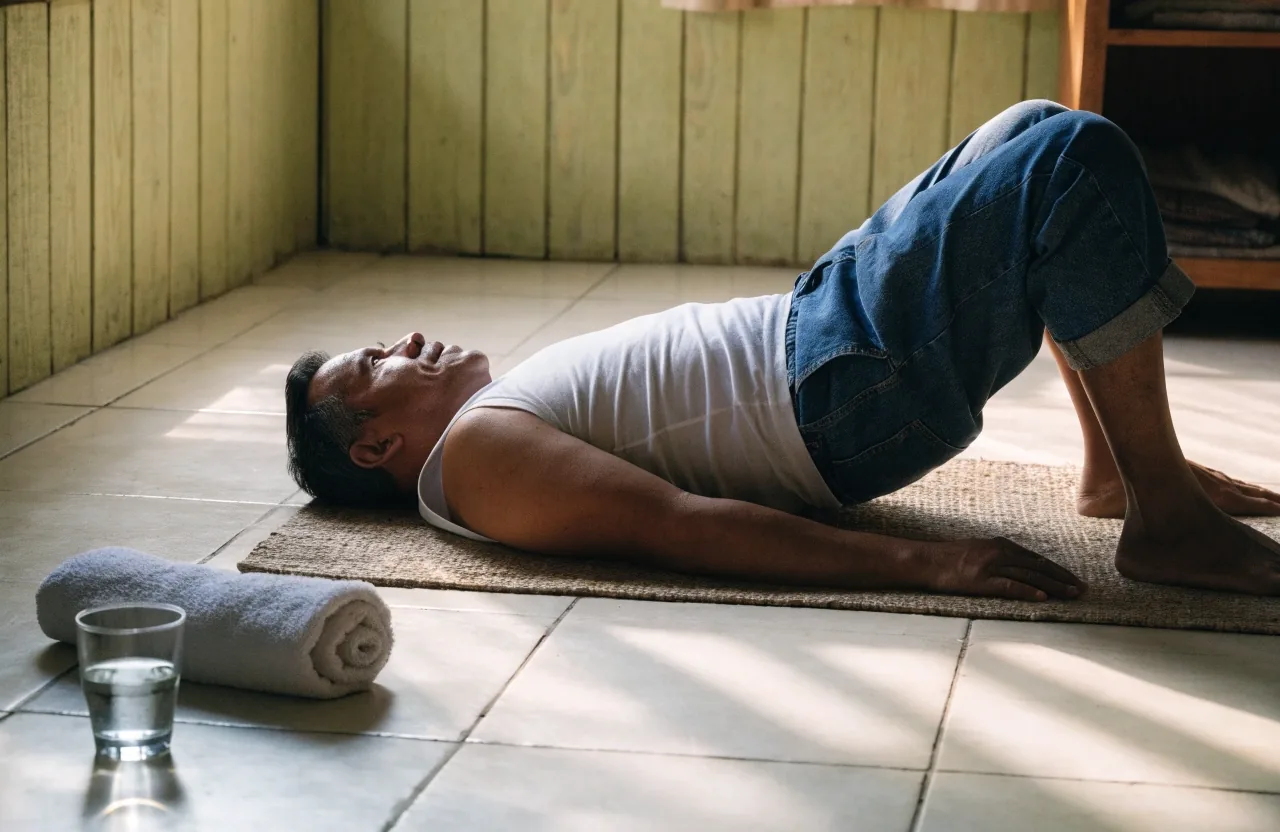
Gentle hip and lower back mobility, done slowly, helps you notice where you are holding tension. Bridges and easy hip rotations are commonly used for this. Keep the effort low. The purpose is awareness, not strength, and a hard session here does not substitute for the pelvic floor work.
Two or three slow repetitions in each direction is a reasonable starting point. If you feel a sharp pull, back off the range and stay where the movement is comfortable.
Posture during long commutes
Sitting on a motorbike or in dense traffic for an hour changes how the pelvis is loaded. Shifting weight at stops, adjusting the seat position, and letting the breath move low are small adjustments that add up. None of them require stopping what you are doing.
If your commute is mostly standing on public transport, the same idea applies in reverse: shift weight from one leg to the other, keep the ribs stacked over the pelvis, and avoid hanging off one hip for the whole ride.
Adjustments at the stops
-
Shift your weight side to side when the bike or bus is stationary.
-
Check the seat or saddle height so the pelvis is not tucked under you.
-
Let the breath reach the lower ribs rather than staying high in the chest.
What to skip while you are learning
Heavy straining, breath-held lifting, and long sessions of hard abdominal work are not useful companions to pelvic floor training for a beginner. That does not mean avoiding all exercise. It means not stacking the routine on top of movements that create a lot of downward pressure while you are still learning to control the muscles.
Pause for now
Holding the breath to lift
Heavy lifts done with a braced, breath-held abdomen push pressure downward through the pelvis.
Pause for now
Long hard core sessions
Endless sit-ups and strain-based ab work are a poor pairing while control is still developing.
Keep doing
Everyday walking and stairs
Ordinary movement around the day is fine and helps circulation and general comfort.
Keep doing
Gentle mobility work
Slow hip and lower back movement at low effort fits comfortably beside the routine.
How this fits with the main routine
Supporting habits make the main exercise easier to feel, but they do not replace it. Keep the Kegel routine as the core practice and treat posture and breathing as background conditions. If you only have five minutes, spend them on the pelvic floor work.
A reasonable split for a beginner is a short pelvic floor session once or twice a day, with the posture and breathing checks folded into moments you already have — before you sit down to work, during a commute stop, or after you stand up from a long meeting.
Where to go next
Three routes depending on what you need today. The routine builder gives you a structure; the technique guide explains the contraction itself; and if something does not feel right, write to us before pushing on.
Questions that come up often
Short answers to the things readers ask about posture, breathing, and how much support work is really needed.
More detail sits on the Common Questions page if you want the longer version of any of these.
Common QuestionsDo these habits replace the Kegel routine?
No. They make the main exercise easier to feel and control, but the pelvic floor contractions are the practice itself. Posture and breathing are the conditions around it, not a substitute.
How long before posture changes feel normal?
It varies. Most people notice the correction quickly while sitting still, then lose it again when they get absorbed in work. That repeated noticing is the skill developing, and it does not need to be perfect from the first day.
Should I hold good posture all day?
No. Holding a rigid posture for hours creates tension of its own. The aim is to return to a neutral position often, and to move around regularly rather than freeze in one shape.
Is walking really enough as support?
For most beginners, yes. Walking involves the pelvic floor in a gentle repeating way without deliberate contraction. It pairs well with a short daily routine rather than replacing the focused work.
What if an exercise hurts?
Stop and rest. Pain is not part of the routine and pushing through it is not useful. If it continues or worries you, speak to a qualified health professional before continuing.
Keep the main practice first
Use the habits on this page to make the pelvic floor work easier to feel, then get back to the routine itself. If you would rather ask something before you start, we answer messages during working hours.
Men's Pelvic Fitness, Jl. Kemang Raya No. 18, Bangka, Mampang Prapatan, Jakarta Selatan 12730, Indonesia. Monday to Friday, 9:00 AM – 6:00 PM (WIB).